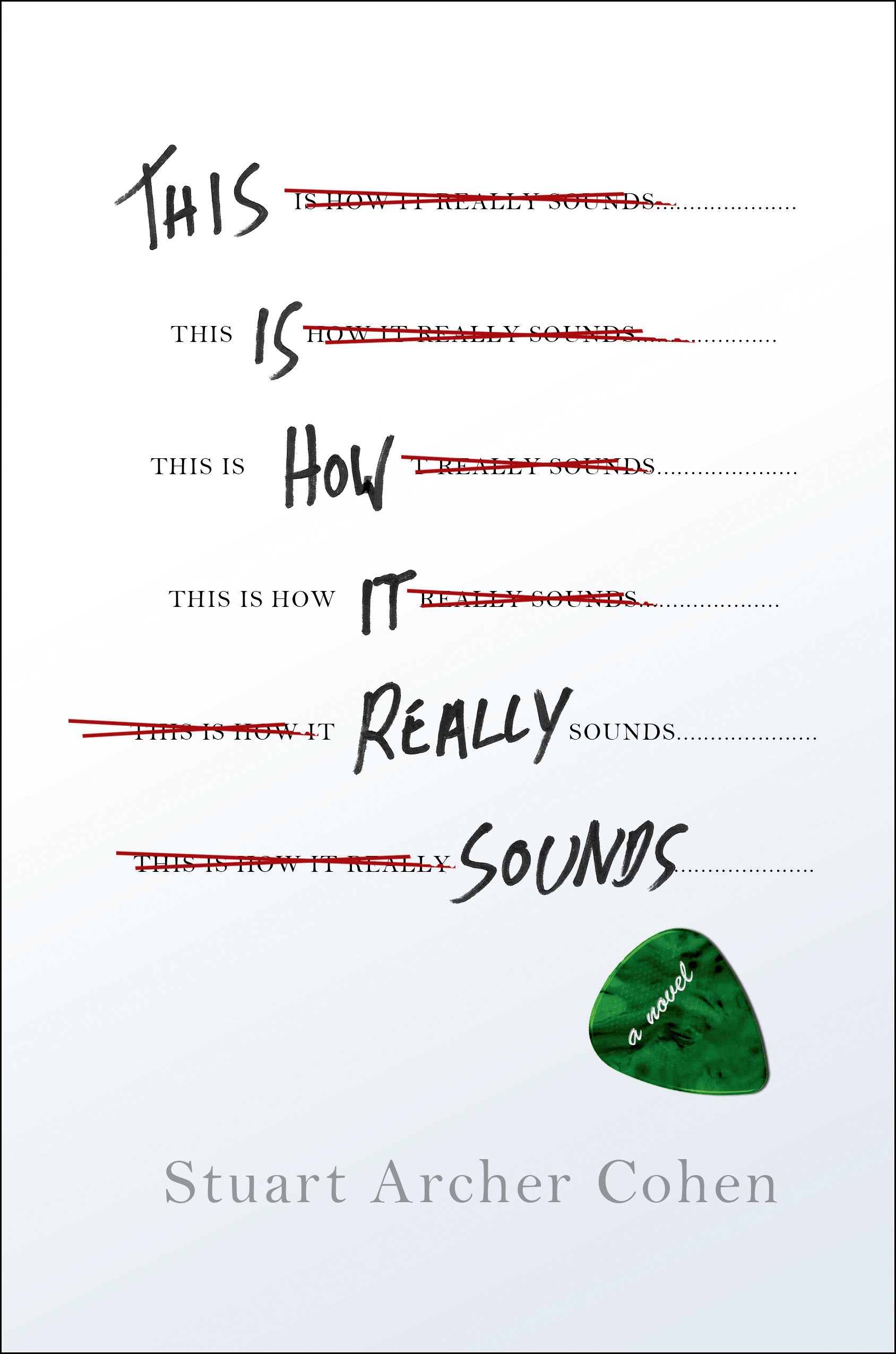
This Is How It Really Sounds
St. Martin’s Press, April 2015
368 pages
Buy this book
In the lurid nightclubs of modern Shanghai, infamous financier Peter Harrington is suddenly confronted by the remnants of his past. Colleagues he’s left behind, rumors of government investigations, and a mysterious World War 2 hero all converge in one hallucinatory night that ends in the labyrinth of an ancient Chinese garden.
On the other side of the ocean, faded rock star Pete Harrington is bankrupt and desperate. Waking from his alcoholic haze, he experiences one last flash of brilliance that sets him on an absurd quest for revenge — on behalf of the entire world.
Setting it all in motion is the greatest extreme skier on the planet. Raised in a world of snow, ice and avalanches, Harry is a legend in a sport that few have ever heard of. Now he cruises the sunny streets of Hollywood, looking for the connection that will change his life.
Part comic satire, part revenge tale, part heart-stopping adventure, This Is How It Really Sounds is about the seductive power of the Other Life — and what happens when you finally grasp it.
“Stylish… Hugely entertaining.”
Booklist
“An impressive and dramatic novel… dazzling ski scenes. Anyone who’s bet his or her future on Wall Street, strapped on a pair of skis or savored a well-told story will want to read this one.”
Kirkus Reviews (Starred)
“A timely and provocative story about money, cultural power, and identity in the digital age.”
Tom Perrotta, author of The Leftovers
“Addictive, highly original, and deeply satisfying.”
Nicole Mones, author of Night in Shanghai
“A wide-ranging, beautifully written novel… Cohen delivers a smart, highly original story.”
Nancy Lord, Alaska Dispatch
“From the very beginning you know you are entering a rare world — one told by an expert storyteller.”
Anchorage Press
The Inside Story
As a teenager, driving through Pennsylvania with my father, we saw a green highway sign for Wilkes-Barre. That really set my father off; he had an army buddy who was from there, and with each road sign announcing Wilkes-Barre’s approach, he became more and more determined to get in touch with his old friend. Mind you, this was at least thirty years since World War Two had ended. In those days, there were still phone booths and phone books, and a half hour later we were able to conjure up a short, mild accountant my father’s age who dutifully met us at an old-fashioned diner on the city’s outskirts. They had a conversation of no apparent profundity to a 17 year old, and when we got back on the highway my father seemed to keep turning it over silently in his mind, probably thinking about the past, and where he was now, and how that had happened. And that’s where This Is How It Really Sounds began.
About 30 years later, in 2008, I was exhausted after writing a long, dark, complex book about revolution, greed, idealism, death squads and filicide. The book had the bad luck to come out precisely in the teeth of the economic collapse it had predicted, in a month of historically low book sales. The following month Barack Obama was elected and for the moment the book’s vision of a Corporate-run sham-democracy seemed to evaporate along with the 3–4 years I had spent bringing it to life. My agent told me that my publishing career was most likely over.
I think all writers, periodically, get back to a place of emptiness. I went into my office and threw words at a variety of moving targets: A fugitive financier living in exile in Shanghai. A faded rock star. A pack of teenage snowboarders going out in the Alaska backcountry to name the unnameable. Of all of them, only the snowboarding one, with its quiet winter spaces and its radiant small-town life, had something I really loved in it.
I decided to try to write it on that level: the illogical, the intuitive. For a very long time, Sounds felt like the book that would bury me as a writer. I took a break to go to South America, and on the way back I described the entire mixed-up, ending-less plot to an old friend, who rescued the whole project simply by saying “That sounds like it could be a great book.” I returned to Alaska and started reading over the manuscript, and it all seemed different. The book fell together in an exhilarating burst of inspiration that I will probably never experience again.